What Is Cheese Tea? HeyTea’s Signature Drink Explained
Say “cheese tea” to someone who has never had it and watch their face do something complicated. The name is doing the drink no favors — but the people who drink it aren’t confused at all. Cheese tea is cold tea under a thick cap of whipped, lightly salted cheese foam, and it has gone from one tiny shop in southern China to a drinks category with thousands of storefronts in barely a decade.
This is the origin story: what the foam actually is, how the drink was invented, who invented it, and how a handful of salted dairy became one of the most copied drinks on the planet.
In this article
- What cheese tea actually is
- The foam: a closer look
- How to drink it: the tilt
- Where cheese tea came from
- How cheese tea reached America before HeyTea did
- HeyTea’s own global march
- From tea shop to culture brand
- The imitators and competitors
- Why it works: the flavor logic
- Frequently Asked Questions
- The takeaway
Key takeaway: Cheese tea started in Taiwan’s night markets around 2010, but HeyTea’s Nie Yunchen perfected it in Jiangmen in 2012 with real cream cheese, fresh milk, and properly brewed tea.
What cheese tea actually is
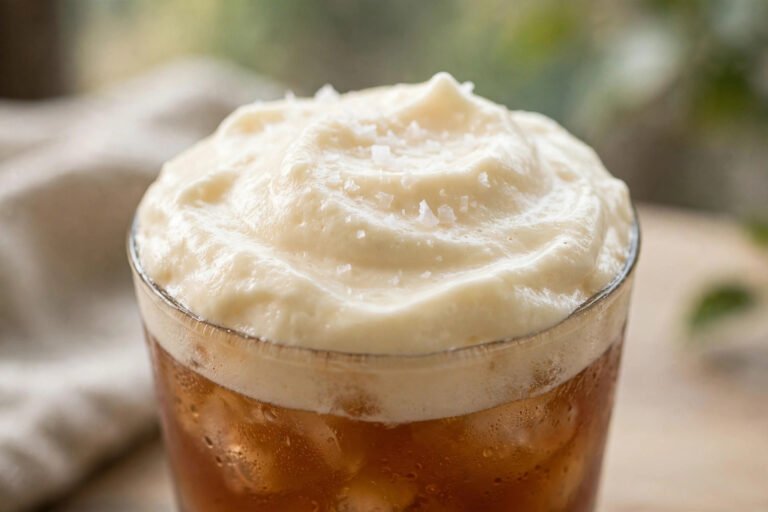
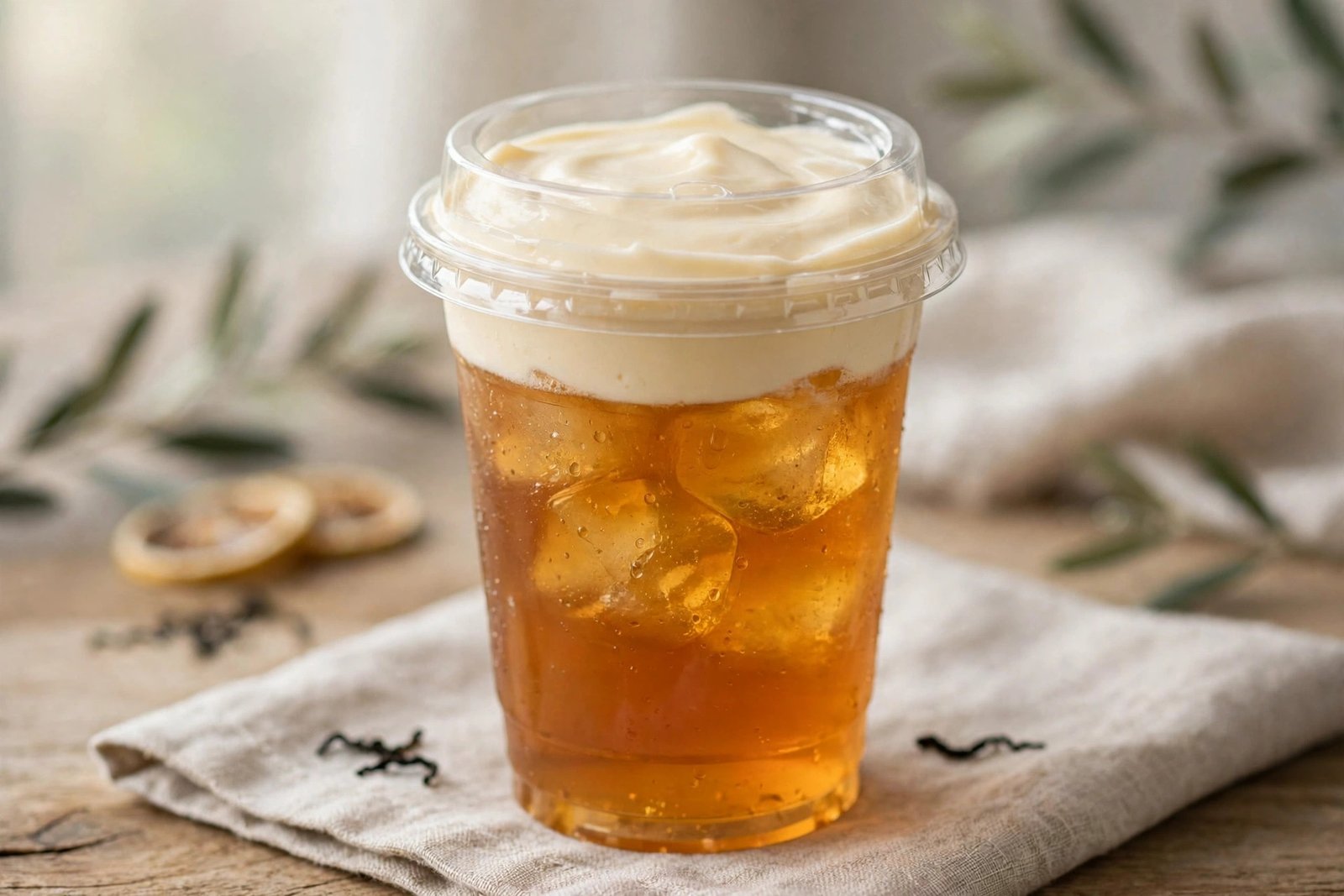
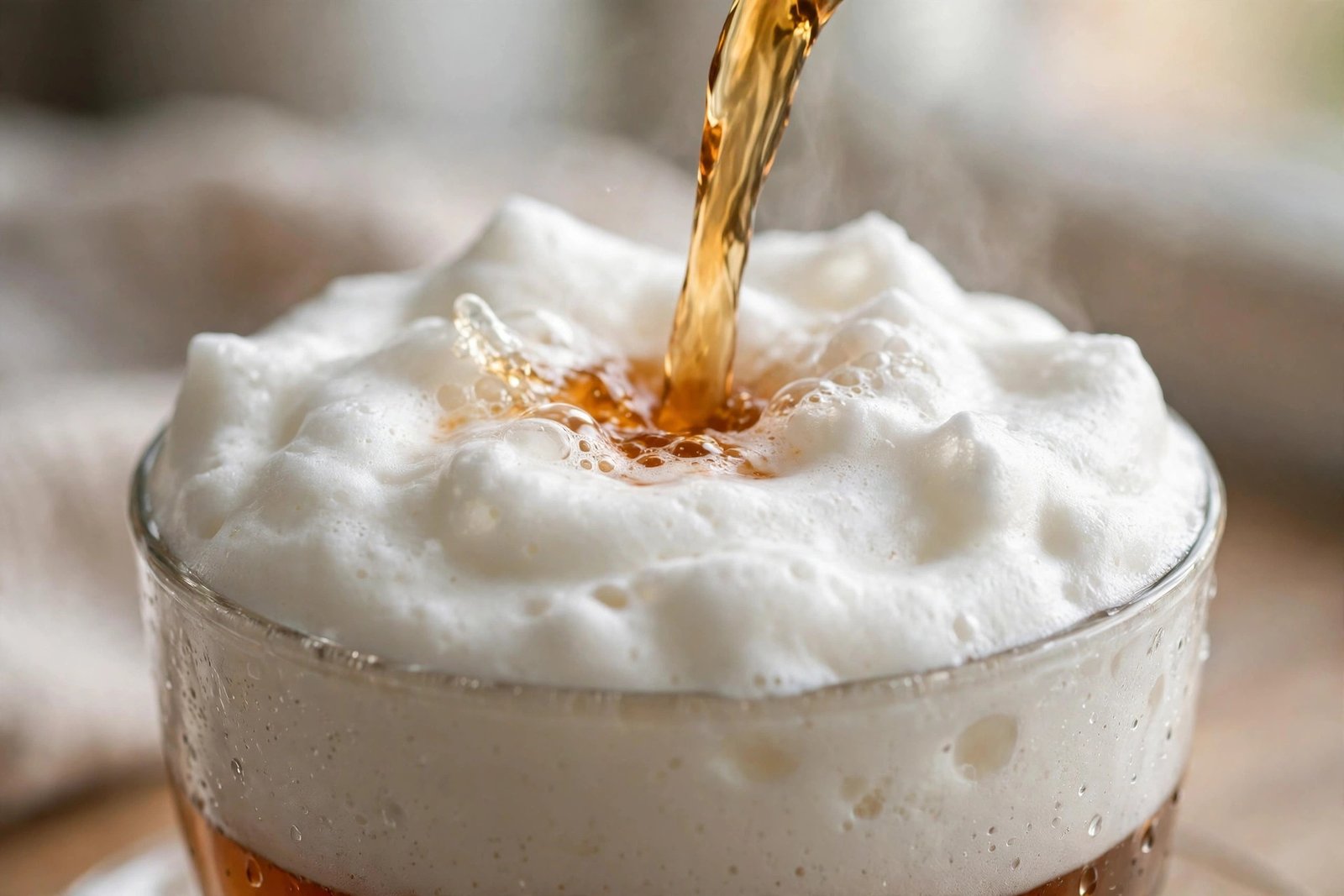
At its simplest, cheese tea is an iced tea — usually green, oolong, or fruit tea — topped with an inch or two of salted cheese foam. No melted cheese, no straw tricks: the cap is a cold, softly whipped cream made with cream cheese, heavy cream, milk, a little sugar, and a measured pinch of salt. You drink it through a sipping lid, tilting the cup so every mouthful carries tea and foam together.
The “cheese” label is slightly misleading. Writing in The Guardian, Tim Jonze described it as rather “a velvety, mascarpone-like foam that has been whisked with sugar and salt before being allowed to float atop your tea” — and noted the whole thing looks “not dissimilar to a pint of beer.” That’s about right: the result sits somewhere between whipped cream and cheesecake filling — tangy, lightly sweet, with a finish of salt.
The foam: a closer look
Ingredients
The short list: cream cheese, whipping cream, milk, sugar, salt. The cream cheese is the flavor backbone — it’s where the tang comes from — while the cream and milk give the foam its body and the sugar and salt do the seasoning. Some shops use a touch of condensed milk for extra richness. What separates premium versions from cheap ones is real dairy: HeyTea’s signature cap is reported to use New Zealand cheese, milk, and cream, and real cream gives the foam a clean, milky flavor that powdered creamer simply can’t imitate.
Texture
The foam is whipped to soft peaks — firm enough to float as a distinct layer on top of the tea, soft enough to slowly slump and fold into the drink as you work through the cup. A well-made cap feels luxurious without being heavy: spoonable, almost mousse-like, but cold enough to read as refreshing rather than dessert-like.
Why salt is the whole game
Without salt, the foam would be sweet cream on sweet tea — pleasant for three sips, cloying by the sixth. The salt does three jobs at once: it cuts the richness of the dairy, it makes the tea underneath taste sharper and more itself, and it sets up the salty-sweet push-pull that keeps you going back for another mouthful. It’s the same logic behind salted caramel taking over every dessert menu on earth: salt in a sweet drink makes both halves taste more like themselves.
How to drink it: the tilt
There is a ritual to drinking cheese tea, and most first-timers get it wrong. Forget the straw — HeyTea and its imitators serve the drink with a sipping lid, and you’re meant to tilt the cup (the classic guidance is roughly a forty-five-degree angle) so the tea flows up through the foam. Each sip should arrive as cold tea wrapped in a layer of salted cream.
The mistakes are all avoidable: a straw bypasses the foam entirely, stirring dissolves the layers into an ordinary creamy tea, and letting the cup sit for half an hour flattens the texture — the foam starts folding into the tea within minutes. Drink it within fifteen to twenty minutes. For a detailed tasting of the classic HeyTea lineup, see our cheese tea review.
Where cheese tea came from
The night-market prototype: Taiwan, around 2010
The rough idea predates HeyTea. Around 2010, vendors in Taiwan’s night markets started topping cold tea with a foamy cap made by blending powdered cheese and salt into whipping cream and milk. It was a clever, cheap topping — tangy, salty, and, by most accounts, a little artificial-tasting. The concept was out in the wild; the execution hadn’t caught up yet.
The HeyTea refinement: Jiangmen, 2012
In 2012, Nie Yunchen — known in English-language coverage as Neo Nie — opened a tiny tea shop in Jiangmen, Guangdong province, originally called Royal Tea. Frustrated by a local milk tea scene built on non-dairy powder and low-grade tea dust, he spent months experimenting in his kitchen to rebuild the night-market cap from real ingredients: actual cream cheese, fresh milk, and properly brewed tea underneath.
The result was richer, cleaner, and unmistakably premium next to anything around it — and it became the drink that put the shop on the map. It’s worth being precise about what HeyTea invented here: the salted foam cap was a night-market idea, but the premium version — real dairy, real tea, the layered presentation — was HeyTea’s. That’s the version that spread, and it’s why the brand is widely credited as cheese tea’s originator. The 2012 date still shows up on HeyTea menus as a badge of honor next to the original drinks.
The queues: Shanghai, 2017
As HeyTea expanded into major Chinese cities around 2016 and 2017, something unusual happened. Its stores started drawing hours-long lines — at the Shanghai opening in 2017, reports had customers paying others to queue for up to three hours on their behalf. Cheese tea stopped being one shop’s signature and became a phenomenon: the drink that turned a tea shop into a destination. In late 2018, The New York Times was already flagging cheese tea as a hit in San Francisco — years before HeyTea itself would reach American shores.
| Year | Milestone |
|---|---|
| ~2010 | Taiwan’s night markets: vendors top cold tea with a powdered-cheese foam cap — the rough prototype |
| 2012 | Nie Yunchen opens Royal Tea in Jiangmen and rebuilds the cap with real cream cheese, fresh milk, and properly brewed tea |
| 2017 | HeyTea’s Shanghai opening draws hours-long queues; cheese tea becomes a full-blown phenomenon |
| 2018 | The New York Times flags cheese tea as a hit in San Francisco — years before HeyTea itself reaches America |
How cheese tea reached America before HeyTea did
Here’s the funny part of the story: many Americans met cheese tea years before they ever saw a HeyTea storefront. The format crossed the Pacific through imitators first. As early as 2018, Eater was already writing “Cheese Tea Could Be the New Bubble Tea,” profiling stateside shops built around the concept.
Happy Lemon, the Chinese chain, was among the earliest to carry cheese-capped tea in American malls. On the West Coast, independent shops like Little Fluffy Head Café in Los Angeles went deep on the format, whipping fresh daily batches of cheese cream and floating them atop a full menu of brewed teas. The cheese-tea-first specialty shop became a whole genre: places where the cap was the headline, not the add-on.
That early wave matters because it primed the American palate. By the time HeyTea itself arrived, cheese tea wasn’t a bizarre concept needing explanation from scratch — it was a known, even trendy format with a cult following.
HeyTea’s own global march
HeyTea’s own expansion reads like a victory lap over territory its imitators had already warmed up:
- Singapore, 2018 — the first overseas store, opening at ION Orchard, where early reports had thousands of cups selling daily during the opening period.
- United Kingdom, August 2023 — the first UK store in London’s Soho, planting the flag in Europe’s most competitive drinks market.
- United States, December 2023 — the Broadway debut in New York City, later followed by an overseas flagship TEA LAB store in Times Square. By early 2025, the chain reportedly operated around 15 New York locations.
- Today — HeyTea counts over 4,000 stores across more than 300 cities worldwide, with locations across Asia, Europe, North America, and Oceania. See HeyTea’s official site for current markets.
From tea shop to culture brand
HeyTea also learned early that spectacle sells tea. A Fendi collaboration produced the “Joy Yellow” drink — a passion fruit and mango green tea priced at 19 yuan per cup — for the luxury house’s “Hand in Hand” exhibition in Beijing, with Fendi-logo merchandise sending queues around the block. A later tie-up with artist Yayoi Kusama played on the connection between her iconic polka dots and HeyTea’s round boba pearls. Cheese tea had gone from night-market novelty to luxury-fashion collab material in barely a decade.
The imitators and competitors
Once HeyTea proved the category, everyone wanted a piece of the cap. Today you’ll find cheese foam — or some version of it — at nearly every major bubble tea chain:
- Gong Cha — the Taiwanese giant, which added cream-crowned options as the format took off.
- CoCo Fresh Tea & Juice — one of the world’s biggest bubble tea chains, with cheese-topped offerings across its menus.
- Happy Lemon — the early American carrier of the format, still serving salted-cream teas in the US.
- The Alley — the brown-sugar specialist, which folds cheese caps into its lineup.
- Tiger Sugar — another brown-sugar giant that added the cap.
- Xing Fu Tang — the Taiwanese brown-sugar brand, riding the same wave.
- Mixue — the budget behemoth that made the format available at rock-bottom prices across Southeast Asia.
The imitation is the sincerest form of market validation: when even budget chains are whipping cheese foam, the category has officially arrived. But the cap is not the same everywhere — some chains use cheese powder and creamer to keep costs down, and the real-dairy version remains HeyTea’s signature advantage. Taste them side by side and the difference is obvious.
Why it works: the flavor logic
Cheese tea shouldn’t work, and that’s exactly why it does. The best drinks are usually built on contrast rather than harmony — think espresso against sweet milk, or chocolate against salt. Cheese tea runs on three contrasts at once:
Salty against sweet. The salted cap against sweetened tea creates the push-pull that makes each sip interesting instead of monotonous. Take away the salt and you have dessert; take away the sweet and you have a confusing soup. Together they hum.
Rich against astringent. The fat in the cream rounds off the tannic edges of green and oolong teas. Those teas can be brisk to the point of bitter on their own; a blanket of dairy smooths them without hiding them, the way milk softens strong coffee.
Cold against creamy. The whole drink is served ice cold, and the chill keeps the rich foam refreshing rather than heavy. Served warm, the same ingredients would feel like dessert soup. Cold, it reads as a treat you can finish.
There’s also a practical reason it caught on: a two-tone cup with a creamy cap is instantly recognizable and photographs beautifully. In an industry of lookalike plastic cups, cheese tea gave the tea shop a visual identity — and in the Instagram era, that’s worth as much as flavor.
Frequently Asked Questions
Does cheese tea actually contain cheese?
Yes, but not the way you’re imagining. The foam is made with cream cheese — the spreadable kind, similar to what goes into cheesecake — whipped with cream, milk, sugar, and salt. There’s no melted cheese, no cheese slice, and nothing savory-heavy. Think of it as a salted, drinkable cheesecake foam.
What does cheese tea taste like?
Cold tea wrapped in salted cream. The foam is tangy, lightly sweet, and finished with salt; the tea underneath is usually sweetened and refreshing. Most skeptics are won over by the second sip — the salt does the work of making the whole thing taste better than the name suggests.
How do you drink cheese tea?
Through the sipping lid, tilted at roughly a forty-five-degree angle so the tea flows up through the foam. Don’t use a straw — you’ll miss the foam entirely — and don’t stir, or you’ll dissolve the layers that make the drink what it is. Drink it within about fifteen minutes for the best texture.
Is cheese tea hot or cold?
Almost always cold. The chill is structural to the experience: it keeps the rich dairy foam refreshing rather than heavy. A warm version would feel like dessert soup. A few shops have experimented with warm cheese teas, but the cold layered cup is the canonical drink.
Which HeyTea drink should I order as my first cheese tea?
Start with the original: a jasmine or oolong Cheezo tea at standard sweetness. Jasmine is the gentler introduction — floral, light, and easy to love under the cap — while the oolong version (built on the King Fone oolong base) is deeper and more tea-forward. For step-by-step ordering mechanics, see our first-timer’s ordering guide, and check the current HeyTea USA menu or the HeyTea UK menu for what’s pouring near you.
The takeaway
Cheese tea is cold tea under a whipped cap of cream cheese, cream, milk, sugar, and salt — a Taiwanese night-market idea from around 2010, refined by Nie Yunchen’s HeyTea in a small Jiangmen shop in 2012 into the drink that launched a global category. The salt is the secret, the tilt is the technique, and the contrast between rich and refreshing is why it survived a decade of imitators, crossed two oceans, and ended up in collabs with Fendi and Yayoi Kusama. It’s one of the few genuinely new drink formats of this century — and now you know exactly what you’re drinking.