HeyTea’s New Matcha Lab in NYC Serves a “Dirty” Matcha With No Coffee in It
HeyTea has opened its first matcha-only lab anywhere in the world, and it chose New York’s Lower East Side. The new shop at 164 Ludlow Street, announced on November 16, 2026, is built entirely around matcha: two origins, three strength levels, an antique stone mill you can grind tea on yourself, and a “Matcha Dirty” that skips the espresso most cafes add.
Here is what is on the menu, what the M60, M100, and M150 numbers mean, how Chinese and Japanese matcha differ, and why a Chinese tea giant is betting on matcha in one of the most crowded matcha cities in the US.
Quick Facts
Detail | What HeyTea has announced |
|---|---|
Name | Heytea matcha lab |
Address | 164 Ludlow Street, Lower East Side, New York |
Announced | November 16, 2026 |
What’s new? | HeyTea’s first matcha-only lab globally |
Matcha origins | Jingshan (China) and Shizuoka (Japan) |
Strength levels | M60, M100, and M150 for drinks; up to M200 for gelato |
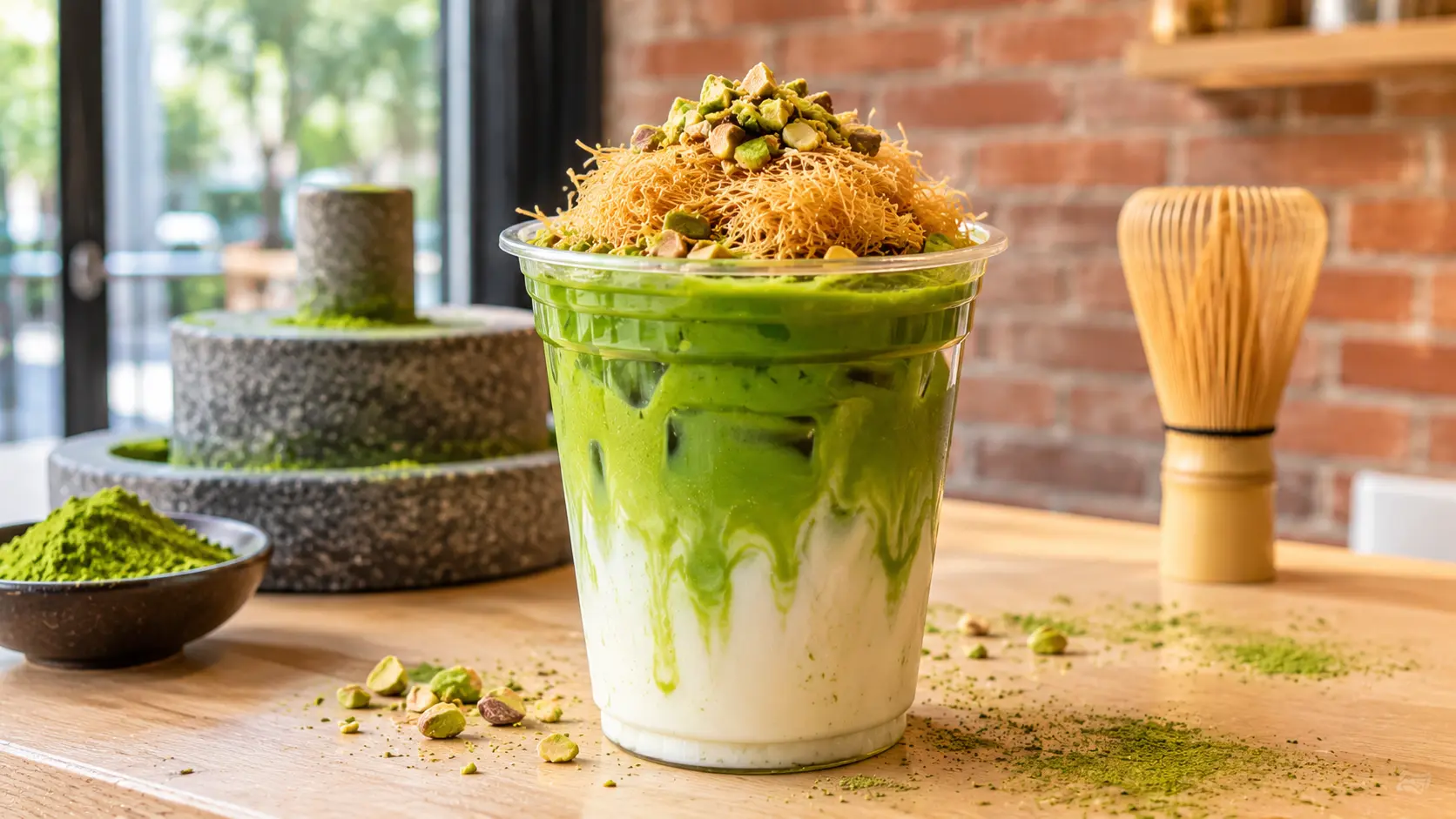
Signature drink | Pistachio Matcha Dirty |
Hands-on feature | Grind tencha on an antique stone mill from Uji, Japan |
Hours and prices | Not published yet; check the HEYTEA app or Google Maps. |
What Is the HeyTea Matcha Lab?
HeyTea uses “lab” stores to test ideas that may later roll out more widely. Its labs can include modules for drinks, gelato, cakes, and baked goods. This is the first one dedicated to a single ingredient.
It is also HeyTea’s fourth special concept in New York. The brand already runs a Heytea Lab in Times Square, a teabar on the Upper East Side, and a Gelato Lab+ in Union Square, which opened in October 2026. New York has effectively become HeyTea’s testing ground in the US.
HeyTea’s Senior Brand Director, Sisi Zhang, framed the idea in the announcement: “When something becomes so mainstream, we dare to ask whether it can still have an edge, culinarily or culturally.”
The Menu: Matcha Dirty, Floats, and Frozen Yuzu
Drink or dessert | What it is |
|---|---|
Matcha Dirty | A matcha latte with a house-made matcha sauce mixed in. No coffee. |
Pistachio Matcha Dirty (signature) | The Matcha Dirty with pistachio and a crisp pistachio kataifi topping |
Matcha Latte Float | A matcha latte topped with a scoop of matcha gelato |
Frozen Yuzu Matcha | Matcha poured over a yuzu and apple sorbet |
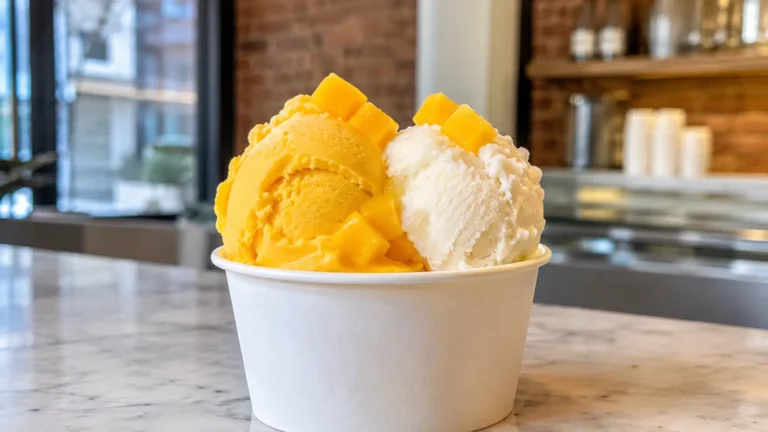
Matcha Gelato | Available at M60, M100, M150 and M200 |
What makes this “dirty” matcha different
At most US coffee shops, a “dirty matcha” means a matcha latte with a shot of espresso added. Chowhound notes the espresso shot adds roughly 64 mg of caffeine to the drink.
HeyTea’s version drops the coffee entirely. Instead, it adds a concentrated house-made matcha sauce to a matcha latte, so the drink gets a double hit of matcha rather than a coffee-matcha mix. If you are a matcha fan who has never liked how espresso bulldozes the tea’s flavor, this is the drink to try first. It still contains caffeine from the matcha itself.
Pistachio kataifi: the Dubai chocolate connection
Kataifi is a shredded phyllo pastry used in Middle Eastern desserts. Toasted with pistachio, it became famous as the crunchy filling in viral “Dubai chocolate” bars. HeyTea is using that same crisp, nutty texture as a topping, which gives the signature drink an obvious social media hook.
The ice cube detail
Iced drinks at the lab are made with matcha ice cubes. As the ice melts, it releases more matcha instead of water, so the drink does not taste weaker the longer you hold it. It is a small detail, but anyone who has finished a watery iced matcha will appreciate it.
What Do M60, M100, and M150 Mean?
HeyTea lets you choose how intense your matcha tastes. According to the company, a higher number means a richer, stronger matcha flavor:
- M60: the gentlest option, a good starting point if you usually order sweet matcha lattes.
- M100: a stronger, more pronounced matcha taste.
- M150: the boldest drink level.
- M200: offered for the matcha gelato only.
HeyTea has not published exactly how much matcha each level contains, so think of the numbers as a strength scale rather than a precise measurement.
Jingshan vs. Shizuoka: Two Matcha Origins
The lab serves hand-whisked matcha from two regions, and the contrast is the most interesting part of the menu.
Jingshan, China | Shizuoka, Japan | |
|---|---|---|
Location | Yuhang District, Hangzhou, Zhejiang Province | Shizuoka Prefecture, central Japan |
HeyTea’s tasting notes | Umami-forward with toasted notes | Fresh green aroma, creamy texture, lingering sweetness |
History | Linked to diancha, the Song dynasty method of whisking powdered tea | One of Japan’s best-known tea regions |
Good for | Drinkers who like savory, nutty flavors | Drinkers who prefer smooth and sweet |
Why Chinese matcha is part of the story
Most Americans think of matcha as Japanese, and Japan did develop the tea ceremony that made it famous. But whisking powdered tea started in China. During the Song dynasty (960 to 1279), powdered tea was whisked with hot water, a practice described in Emperor Huizong’s Treatise on Tea. Jingshan, near Hangzhou, is described in Chinese state media as the birthplace of that whisking method, known as diancha.
Today China is also the world’s biggest producer. China produced more than 12,000 tonnes of matcha in 2025, nearly 70% of global output, according to People’s Daily, citing the 2026 China Matcha Industry Development Report. Serving Jingshan matcha next to Japanese matcha in New York is a quiet statement from a Chinese brand about where the tradition began.
HeyTea has been building toward this for a while. Its Upper East Side teabar, which opened in June 2026, already serves a “Deep Matcha” made with Jingshan matcha from Hangzhou.
The Stone Mill: Grind Your Own Tencha
The most unusual feature is hands-on. Guests can grind tencha, the leaf that becomes matcha, using an antique stone mill from Uji, Japan, which HeyTea says dates to the shogunate era.
Tencha is shade-grown for several weeks before harvest, then steamed and dried without being rolled, which is what separates it from regular green tea. Traditionally, it was ground by hand on stone mills. Today most producers use slow-turning mechanical stone mills so the tea does not heat up and lose quality. Seeing the process up close explains why good matcha takes so much time and costs what it does.
Does “Ceremonial Grade” Mean Anything?
HeyTea describes its matcha as ceremonial grade. It is a phrase you will see on nearly every matcha menu, so it is worth knowing what it means.
“Ceremonial grade” is not an official classification in Japan. Ippodo, one of Kyoto’s oldest tea companies, says the term was invented to market matcha to Western buyers and is not used in Japan. In practice, it usually signals a higher-quality matcha meant to be whisked with water rather than baked into food, but there is no regulated standard behind it.
A more useful guide is the origin, the harvest and how the tea tastes, which is exactly what the lab’s two-origin menu lets you compare.
Why HeyTea Is Betting on Matcha Now
Matcha demand has grown so fast that Japan’s growers have struggled to keep up. Semafor reported that Japan’s powdered green tea exports rose about 75% in 2024 from the year before, and news outlets including CBC and Good Morning America have covered the resulting shortages and rising prices in 2025 and 2026. A tencha plant needs about five years before it can be harvested, so supply cannot catch up quickly.
That context helps explain HeyTea’s two-origin approach. Pairing Japanese matcha with Chinese matcha gives the brand flexibility and a story to tell. It also helps HeyTea stand out on the Lower East Side, a neighborhood already full of independent matcha cafes.
HeyTea itself is no small player. Founded in 2012 in Jiangmen, Guangdong, it says it operates more than 3,500 stores in over 330 cities, has 150 million registered members and runs more than 45 US stores in markets including New York, Los Angeles, the San Francisco Bay Area, Houston, Seattle and Boston. Learn more in our guide to how HeyTea became a global tea brand.
The Design: No Traditional Tearoom
HeyTea deliberately avoided the look of a traditional Chinese or Japanese tearoom. The space mixes exposed original brick (parts of it dusted with green matcha powder) with a soft beige wall, pale wood furniture, stainless-steel accents, and a glass front facing Ludlow Street. Displays hold matcha tools, jars of tencha, the stone mill, and short educational notes about how matcha is made.
Before You Go
- Check hours and prices. HeyTea has not published them yet. The HEYTEA app and Google Maps will have them first.
- Start at M60 or M100. Unless you already drink straight matcha, the highest level can taste intense.
- Try both origins. Order the same drink with Jingshan and Shizuoka matcha if you can. It is the best way to taste the difference.
- Remember the caffeine. The Matcha Dirty has no coffee, but matcha does contain caffeine.
- Visit the other labs. The Union Square Gelato Lab+ and the Upper East Side teabar make it easy to plan a HeyTea crawl across Manhattan.
If you prefer HeyTea’s regular menu, our Cloud Matcha Latte guide and full HeyTea Menu USA cover the matcha drinks available at standard stores.
Frequently Asked Questions
Where is the HeyTea Matcha Lab?
It is at 164 Ludlow Street on New York’s Lower East Side.
When did the HeyTea Matcha Lab open?
HeyTea announced the opening on November 16, 2026. It is the brand’s first matcha-only lab worldwide.
Does HeyTea’s Matcha Dirty have espresso?
No. HeyTea’s Matcha Dirty mixes a house-made matcha sauce into a matcha latte instead of adding espresso.
What do M60, M100, and M150 mean at HeyTea?
They are HeyTea’s matcha strength levels. A higher number means a richer, stronger matcha flavor. Matcha gelato also comes in M200.
Where does HeyTea’s matcha come from?
The lab uses matcha from Jingshan in Hangzhou, China, and from Shizuoka, Japan.
Is “ceremonial grade” matcha an official grade?
No. It is a marketing term rather than an official Japanese classification, though it usually signals higher-quality matcha intended for drinking.
How much do drinks at the HeyTea Matcha Lab cost?
HeyTea has not published prices. Check the HEYTEA app or the store’s Google Maps listing.